Choosing the desert, choosing ease
One of the things I never want to take for granted about living in Southern California is how close we are to everything. Mountains, beaches, deserts. All within a drive that still feels doable for a single day.
This past Saturday, our family was beckoning adventure in a quieter way. No big agenda. No checklist. Just a feeling that it was a Joshua Tree kind of day, especially with the sun setting earlier and the desert light doing what it does best in winter.
It was early January, which meant the opposite of summer heat. By the time the sun started dipping, the temperature dropped to around 41 degrees and we were absolutely freezing. Worth it, but freezing. It was one of those days where the cold surprises you because the sun looks warm even when it is not.
We knew going in that this was not going to be a heavy walking or hiking day. And honestly, Joshua Tree is one of those parks where that choice still works beautifully. It can be an incredibly drive-through sort of park if that is what your day allows, with major points of interest right off the main road.
That was exactly what we needed. Fresh air, wide open space, a slow drive, and a sunset that made the whole thing feel intentional instead of rushed.
This post may include a mix of affiliate links and helpful external resources. If you choose to make a purchase through an affiliate link, I may earn a small commission at no extra cost to you. I only share products, experiences, and resources that are genuinely relevant to our family and this story.
TLDR
- Joshua Tree can be a beautiful, low-pressure day trip, even if you mostly stay in the car
- Winter visits mean cold temperatures but incredible light and quieter moments
- The park is very family-friendly when you lean into programs like Junior Rangers and visitor centers
- Not every National Park visit needs to be long, intense, or physically demanding to be meaningful
- Choosing the desert, choosing ease
- Arriving late afternoon and letting the park set the pace
- Skull Rock and shortstops that still feel adventurous
- Visitor centers, stamps, and discovering the Junior Ranger world
- The Junior Ranger program and why it works so well for families
- Using the America the Beautiful Pass as a family
- Sunset light, frozen fingers, and dancing to stay warm
- A reminder that pace matters
- What to pack for a winter Joshua Tree day trip
- Who this experience is for
- Final thoughts
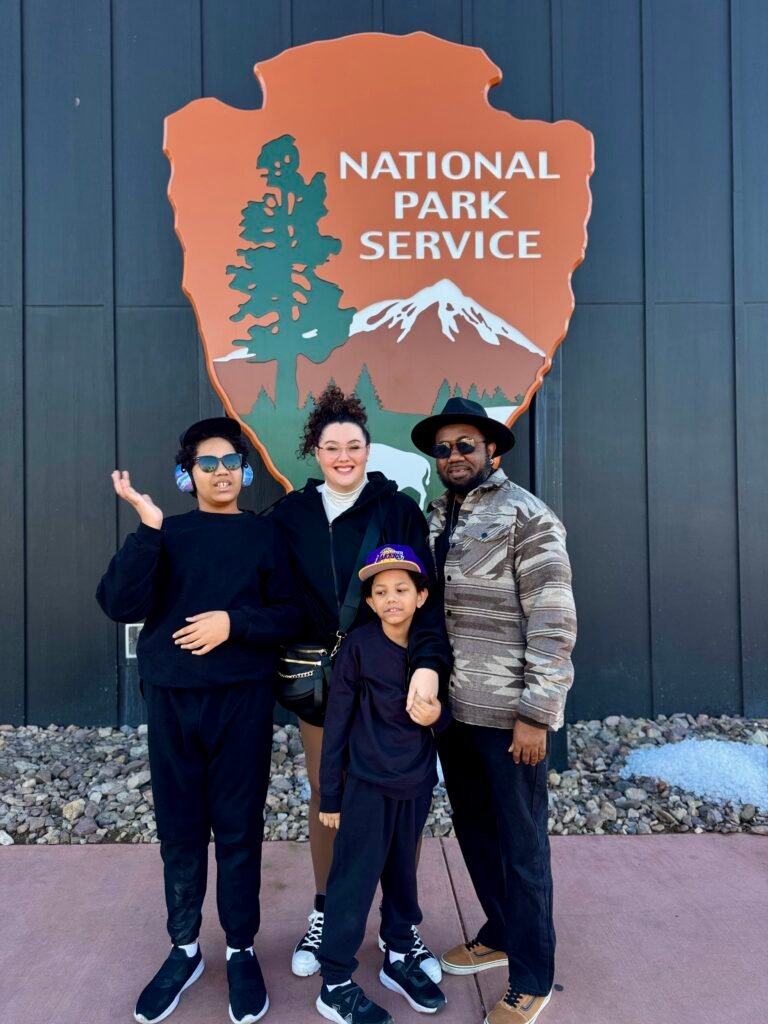
Arriving late afternoon and letting the park set the pace
We reached the park gates around 3pm, which might sound late to some people, but it was perfect for us. One of the things I appreciate about Joshua Tree is that it does not technically close. There are camping options throughout the park, and the landscape feels just as special in the quieter hours.
Joshua Tree National Park protects nearly 800,000 acres where two deserts meet, the Mojave and the Colorado. You can actually feel that transition as you move through the park. The Joshua Trees themselves thrive in the higher, cooler Mojave Desert, while the lower elevations shift into creosote, cacti, and a different rhythm entirely.
Even from the car, the scale of it all is grounding. Wind-shaped rock formations. Long stretches of road where the landscape feels untouched. It invites you to slow down without asking you to do much at all.
This was not a hiking-heavy day, but it was still very much a Joshua Tree day.
Skull Rock and shortstops that still feel adventurous
One of our planned stops was Skull Rock, which sits right off the main road and is easy to access. It is one of those features that feels playful and slightly surreal, especially for kids.
We got out, climbed a bit, took photos, and explored just enough before the wind started cutting through us. The cold came in fast. Ears freezing, fingers numb, that very clear desert winter reminder that layers matter.
We warmed up in the car and continued on, spotting plants and rock formations mentioned in the Junior Ranger book as we drove. The kids loved recognizing things as we passed them. It turned the drive into a quiet scavenger hunt of sorts.
Visitor centers, stamps, and discovering the Junior Ranger world
We always make time for visitor centers when we visit National Parks. They ground the experience, especially for kids, and offer context that turns scenery into story.
On this trip, we discovered the National Parks Passport stamp books. They are incredibly affordable and quickly become one of those souvenirs that feels meaningful rather than cluttered. After the initial purchase, the stamps themselves are free, which makes every visit feel like it leaves something tangible behind.
We picked up a standard passport for our oldest, Michael, and the Junior Ranger version for our youngest, Sebastian. Both were immediately excited, and we grabbed our first stickers and cancellation stamps right away.
When making purchases, there is an option to round up to donate to the Junior Ranger program. We chose to do that, and I am so glad we did. One of the rangers spent time with our kids, handed them each a workbook and pencil, explained how the program works, and swore them in on the spot.
She then gave my husband two beautiful wooden Junior Ranger badges to hold onto so the kids could earn them officially once their assignments were completed. All of this was complimentary through the program.
What really stuck with me was watching an older gentleman get in line behind us to do the Junior Ranger experience for himself. It was a quiet reminder that curiosity does not age out.
The Junior Ranger program and why it works so well for families
The Junior Ranger program is one of my favorite parts of visiting National Parks. The activity booklets are thoughtful and engaging, covering geology, wildlife, conservation, and observation. Kids can draw, write, identify plants, and notice details they might otherwise overlook.
There are also expanded programs, like Night Explorer and Junior Paleontologist options, depending on the park and season.
What I love most is that it turns the visit into participation instead of consumption. Kids are not just there. They are noticing. Learning. Protecting.
And yes, adults can absolutely participate too.
Using the America the Beautiful Pass as a family
We take full advantage of our America the Beautiful Pass, which provides free lifetime access to National Parks and other federal recreation sites for individuals with permanent disabilities.
Our kiddo qualifies for this pass, and we applied for it on our first trip to Joshua Tree a couple of years ago. The pass covers entrance fees for the pass holder and passengers in a non-commercial vehicle, which makes spontaneous visits like this one much easier.
The application process is straightforward, and the pass recognizes a wide range of disabilities, including developmental conditions like autism. For families like ours, it removes one more barrier to getting outside together.
It is a resource worth knowing about if it applies to your family.
Sunset light, frozen fingers, and dancing to stay warm
As the sun started to lower, the desert shifted colors in that way that only the desert can. Soft golds. Long shadows. Joshua Trees standing still against the sky.
We stopped again to watch the sunset through the rocks, admired the silhouettes of the trees, and did a little dance just to stay warm. It was one of those moments that felt unplanned but perfect.
Eventually, we ran back to the car, laughing and rubbing our hands together, and continued driving through the park as dusk settled in.
Joshua Tree is also known for its stargazing and is designated as an International Dark Sky Park. On this particular evening, we did not stay late enough to fully lean into that, but knowing it is an option makes future trips feel full of possibility.
A reminder that pace matters
After exiting the park, we went out for dinner and headed home. No exhaustion. No pressure. Just a really good day spent together.
Not every National Park experience needs to be all day, early morning, or extremely active. Sometimes enjoying the view from the comfort of your car, stepping out when it feels right, and breathing in fresh air is enough.
We touched grass. We got cold. We laughed. And that felt like more than enough.
What to pack for a winter Joshua Tree day trip
Winter desert visits require more layers than you might expect.
Gloves are not optional. Hats help. Wind-blocking jackets matter. Bring water even if it is cold, and snacks that do not freeze solid. If you plan to rely on maps or activity books, stop at a visitor center early because cell service is extremely limited. My Theme Park Winter Essentials work for this trip too!
Joshua Tree has no gas, food, or lodging inside the park, so preparation matters even for short visits.
Who this experience is for
This kind of visit is ideal for families who:
- Want a low-pressure introduction to Joshua Tree
- Are traveling with kids who benefit from shorter outings
- Prefer scenic drives and short stops over long hikes
- Want flexibility instead of rigid plans
Final thoughts
We cannot wait to go back for a more active adventure next time. But this trip was a reminder that there is no right way to experience the outdoors.
Do things at your own pace. Show up how you can. Let the day be what it is.
Escape the ordinary. And bring gloves.
Prices, entertainment offerings, and event details may change year to year.
If you’re planning more unique experiences, I keep all of my long-form guides organized under Resources.

Leave a Reply